


Elemental Mercury in hand – Photo by Manuel Saldarriaga – El Colombiano
Important Disclaimer
Emeramide (also known as NBMI or N,N’-bis-(2-mercaptoethyl) isophthalamide) is an investigational product. It has not been approved by the U.S. Food and Drug Administration (FDA) for any use, including the treatment, cure, mitigation, or prevention of mercury intoxication or any other disease or condition. The information below describes a published pilot clinical study and is provided for educational and informational purposes only. It is not intended to diagnose, treat, cure, or prevent any disease. Individual results may vary. Consult a qualified healthcare professional for medical advice. Further research is required to confirm any potential effects.
Paradise Lost to Heavy Metal Contamination
Zaruma, Ecuador, is on the UNESCO World Heritage site Tentative List and is a national heritage site in Ecuador. It is south of the big city Guayaquil, which most people who fly out to the Galápagos Islands recognize as the jumping-off place for Darwin’s famous islands. Zaruma is built on top of what locals call Montaña de oro (Mountain of Gold), and it literally is.
Extracting Gold Using Mercury
There are tiny flecks of gold deep inside Montaña de Oro that miners extract using liquid mercury to dissolve the gold from the dirt. Miners then heat the mixture of gold and elemental mercury, which evaporates the liquid mercury so the gold can be recovered. As a result of heating the elemental mercury, invisible, toxic mercury vapor is released into the air.

In the picture a local miner uses his T-shirt as his only protection, which mercury vapor easily penetrates.
Ignoring UNEP’s Minamata Convention on Mercury
Despite the fact that Ecuador has signed the United Nations Environment Programme’s (UNEP) Minamata Convention on Mercury, which was aimed at curbing the worldwide release of anthropogenic mercury pollution, Ecuador continues to allow the import of mercury in quantities that support both legal mining operations and artisanal do-it-yourself miners, who often “burn gold” by heating the amalgam on a campfire or even in the kitchen.
Mercury Has a Dramatic Impact on Health and Livelihood of Gold Miners
According to the World Health Organization, mercury is a bioaccumulative toxin that builds up over time in critical areas. Mercury vapor (which is converted to inorganic mercury inside the body) can accumulate in the kidneys, heart, and brain. Miners may eventually become so sick they cannot support their families, while they experience tremors and other symptoms. Some of the reported symptoms associated with mercury exposure include pain, headache, kidney dysfunction, muscle aches, and intestinal problems.
Study of NBMI (Emeramide) in Mercury-Exposed Gold Miners
A total of 36 miners took part in a randomized, double-blind, placebo-controlled pilot feasibility trial evaluating NBMI (Emeramide) in individuals with elevated urinary mercury levels and signs consistent with mercury intoxication. The study was divided into three groups. One group received 100 mg/day, the second received 300 mg/day, and the third received a placebo for 14 days. After the study period, placebo participants later received the investigational product. The participants came to the same local hospital daily to receive their medications and meet with the investigators. Biological samples were taken before, during, and after the study for analysis. The study was conducted at Hospital Doctor Humberto Molina in Zaruma, Ecuador, and results were published in 2018 in the journal Environmental Health.
Observed Changes in Symptoms
In the 14-day treatment period, the 300 mg/day group showed a statistically significant decrease in physical fatigue scores compared with the placebo group. There were indications of positive effects on other symptoms, such as sleeping problems. The medical intoxication score improved in all groups, including placebo, with no statistically significant differences between groups. Some participants reported reductions in symptoms such as excessive salivation. Effects on neuromotor tests were limited and generally not statistically significant. The 100 mg/day group showed smaller changes that were not statistically significant versus placebo on most measures.
Observations Related to Mercury Levels and Other Findings
Urinary mercury concentrations (unadjusted) were significantly lower in the 300 mg/day group compared with placebo at day 15; the difference was less distinct after adjustment for creatinine. Plasma mercury levels showed modest reductions across groups without statistically significant differences. Participants in the 300 mg/day group reported increased energy levels consistent with the fatigue score improvements. The study authors noted that some effects of long-term mercury exposure may be permanent, and the investigational compound is designed to bind certain metals.
The 100 mg/day group showed more modest changes. The study authors suggested that ongoing oxidative stress related to mercury exposure may play a role in symptom persistence. One of the more noticeable observed changes in the higher-dose group was related to reported energy levels.
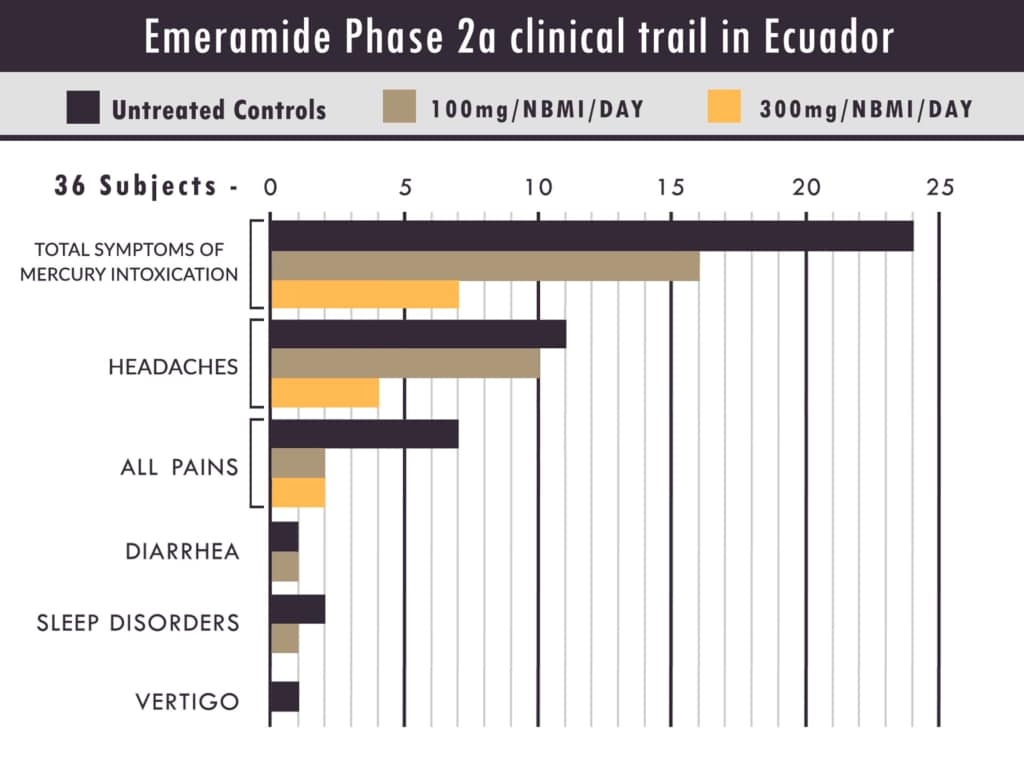
Emeramide Phase 2a clinical trail in Ecuador
Ongoing Mercury Exposure
While the miners who received 300 mg/day showed certain improvements on selected measures, the control (placebo) group did not show the same pattern of change on those measures. This occurred in the context of continued community exposure to mercury vapor from ongoing gold-mining activities in Zaruma.
Safety Observations from the Study
No serious adverse events were reported. Adverse events (primarily headaches and gastrointestinal symptoms) occurred at similar rates across all groups, including placebo. No participants discontinued the study due to adverse events. Laboratory measures related to blood counts and certain minerals did not indicate concerning changes attributable to the investigational product in this short trial.
Summary of Study Findings
This small pilot feasibility study provided preliminary observations that NBMI (Emeramide) at 300 mg/day was associated with a statistically significant reduction in physical fatigue and indications of effects on certain other symptoms and unadjusted urinary mercury levels in the context of chronic mercury exposure. The study authors concluded that more comprehensive studies with larger sample sizes, longer follow-up, and additional measures (including fecal mercury analysis) are mandatory to verify any effects. The compound remains investigational and is not approved by the FDA.
Further clinical research, including ongoing trials, continues to evaluate NBMI.
Legal Disclaimer
This page provides general information about the chemical composition and development history of Emeramide. Emeramide has not been approved by the U.S. Food and Drug Administration (FDA) for any purpose. The information on this website has not been evaluated by the FDA. This product is not intended to diagnose, treat, cure, or prevent any disease. Emeramide is an investigational compound. It is not available for general use. Any potential use of this compound must be conducted in full compliance with all applicable federal, state, and local laws and regulations.