

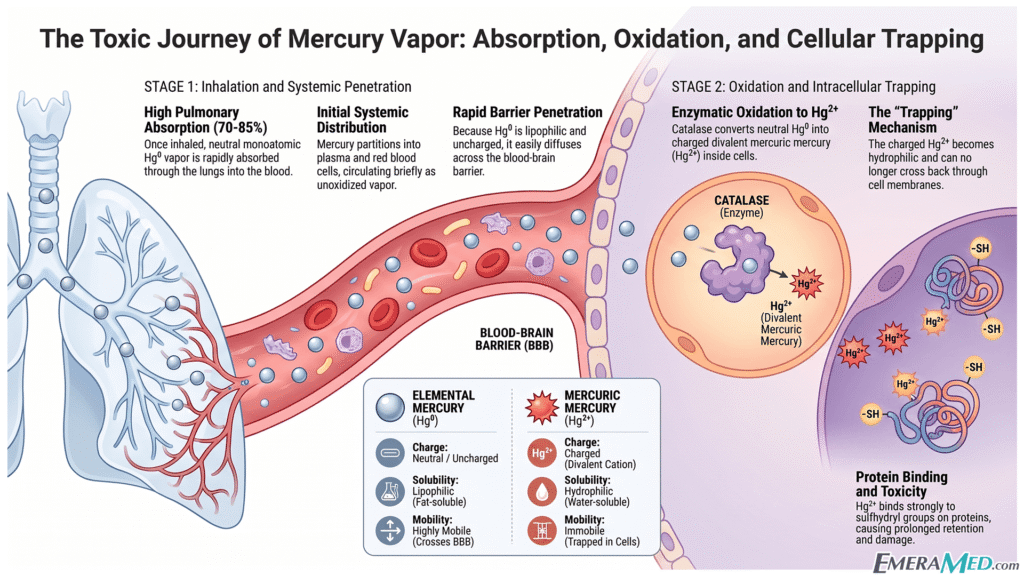
Elemental mercury vapor (Hg⁰) is uncharged (neutral monoatomic form), highly lipophilic (lipid-soluble), and volatile. This allows it to be readily absorbed (~70–85% or up to ~80% in many studies) through the lungs when inhaled. Once in the bloodstream, its neutrality and lipophilicity let it easily diffuse across lipid bilayers of cell membranes, including the blood-brain barrier (BBB) and placental barrier.
What Happens Upon Entry into the Body
After absorption into the blood, Hg⁰ distributes rapidly throughout the body. It partitions into plasma and red blood cells (RBCs), with a high initial RBC/plasma ratio. Some remains as unoxidized vapor briefly in the blood and can be exhaled. However, the majority undergoes oxidation.
Conversion to a Different Form
Oxidation of Hg⁰ to mercuric mercury (Hg²⁺, the divalent ionic form) occurs rapidly in blood and tissues. The primary enzyme is catalase (in the presence of hydrogen peroxide, H₂O₂).
This happens in:
- Red blood cells
- Lungs
- Liver
- Brain
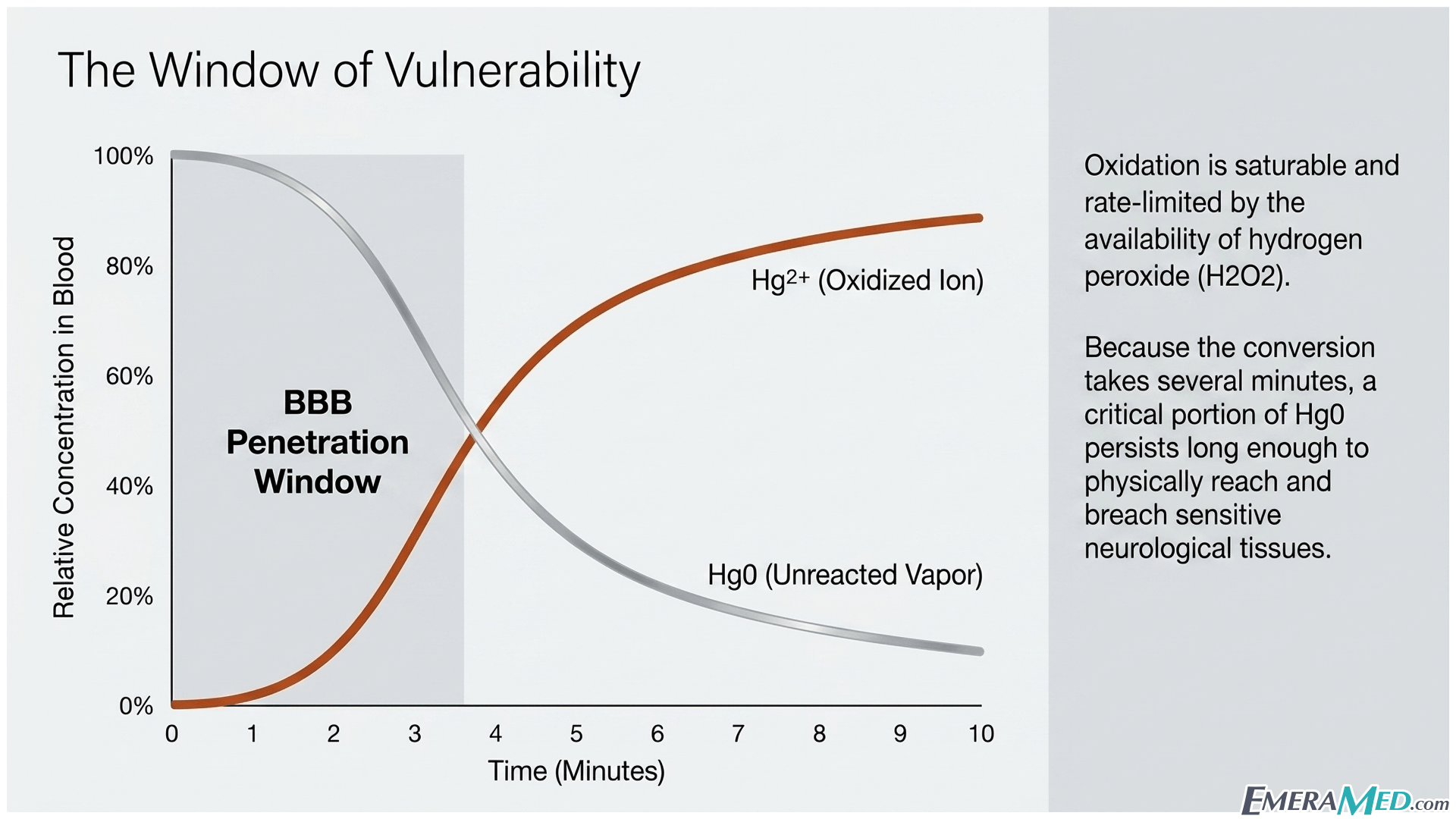
The process takes several minutes in blood (not instantaneous). Oxidation is saturable and rate-limited by H₂O₂ availability. Because it is not instantaneous, a portion of Hg⁰ persists long enough to cross into sensitive tissues like the brain before full conversion.
Key change: Neutral/unreacted Hg⁰ → charged Hg²⁺ (divalent cation). Once oxidized, Hg²⁺ binds strongly to sulfhydryl (-SH) groups on proteins, enzymes, and metallothionein, making it far more reactive and less mobile.
Clarification on Toxicity
Elemental mercury vapor (Hg⁰) is one of the most hazardous forms of mercury precisely because it is uncharged and lipid-soluble. This allows it to be efficiently absorbed (~70–80% or higher) through the lungs when inhaled, cross cell membranes easily (including the blood-brain barrier), and reach sensitive tissues like the brain before significant oxidation occurs.
Once inside cells, it oxidizes to Hg²⁺ (the charged ionic form), which then binds to proteins and enzymes, causing damage. This intracellular trapping is what drives much of the neurotoxicity.
Effects on Charge and Cell Penetration
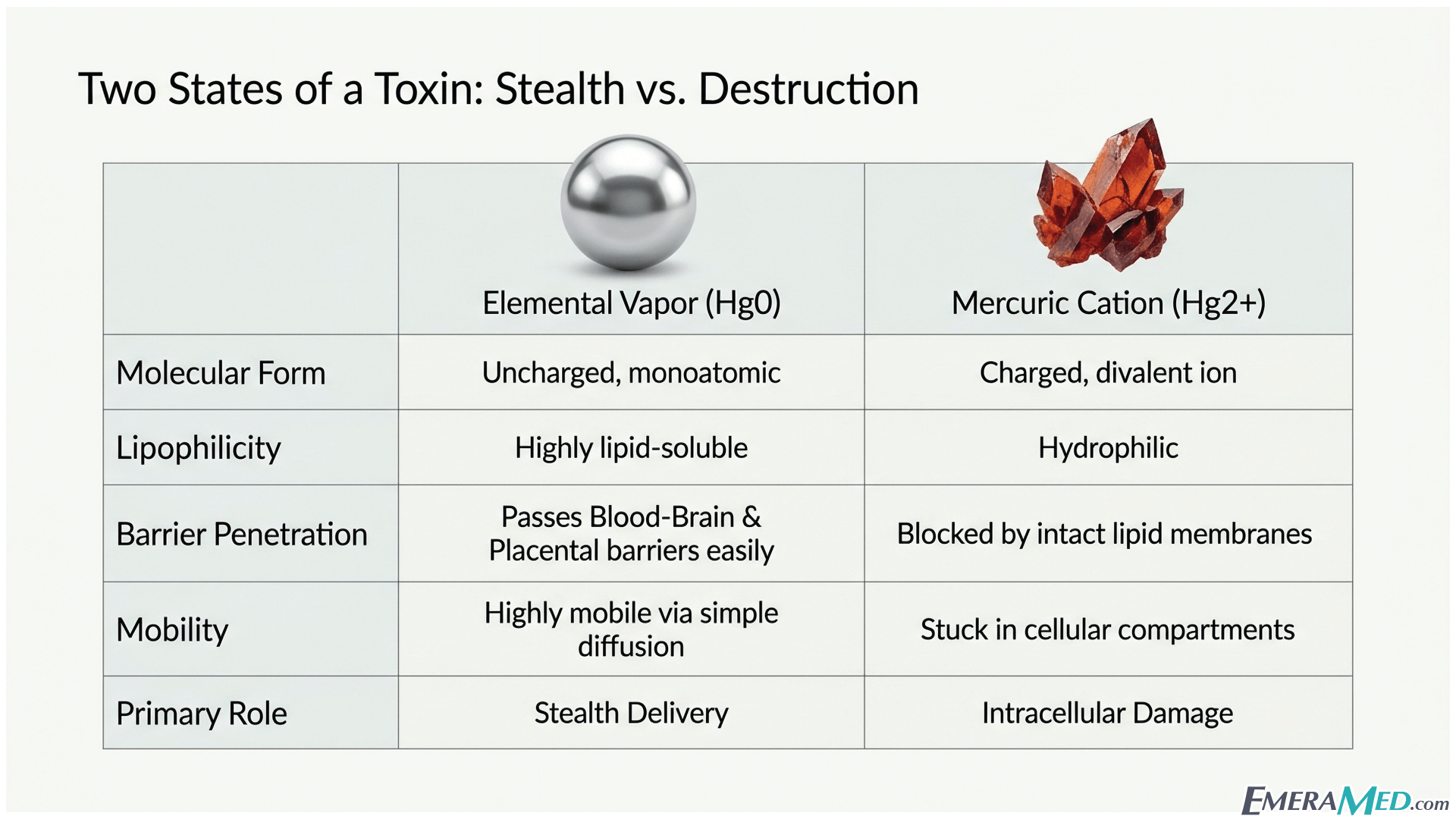
- Hg⁰ (uncharged): Easily penetrates cell membranes and barriers via simple diffusion due to its lipophilicity and lack of charge. This is why vapor exposure can affect the central nervous system.
- Hg²⁺ (charged): Becomes hydrophilic and charged. It does not readily cross intact lipid membranes or the BBB by diffusion. Instead, it gets trapped inside cells where oxidation occurred. It accumulates by binding to intracellular ligands.
Consequences:
Key Concepts at a Glance
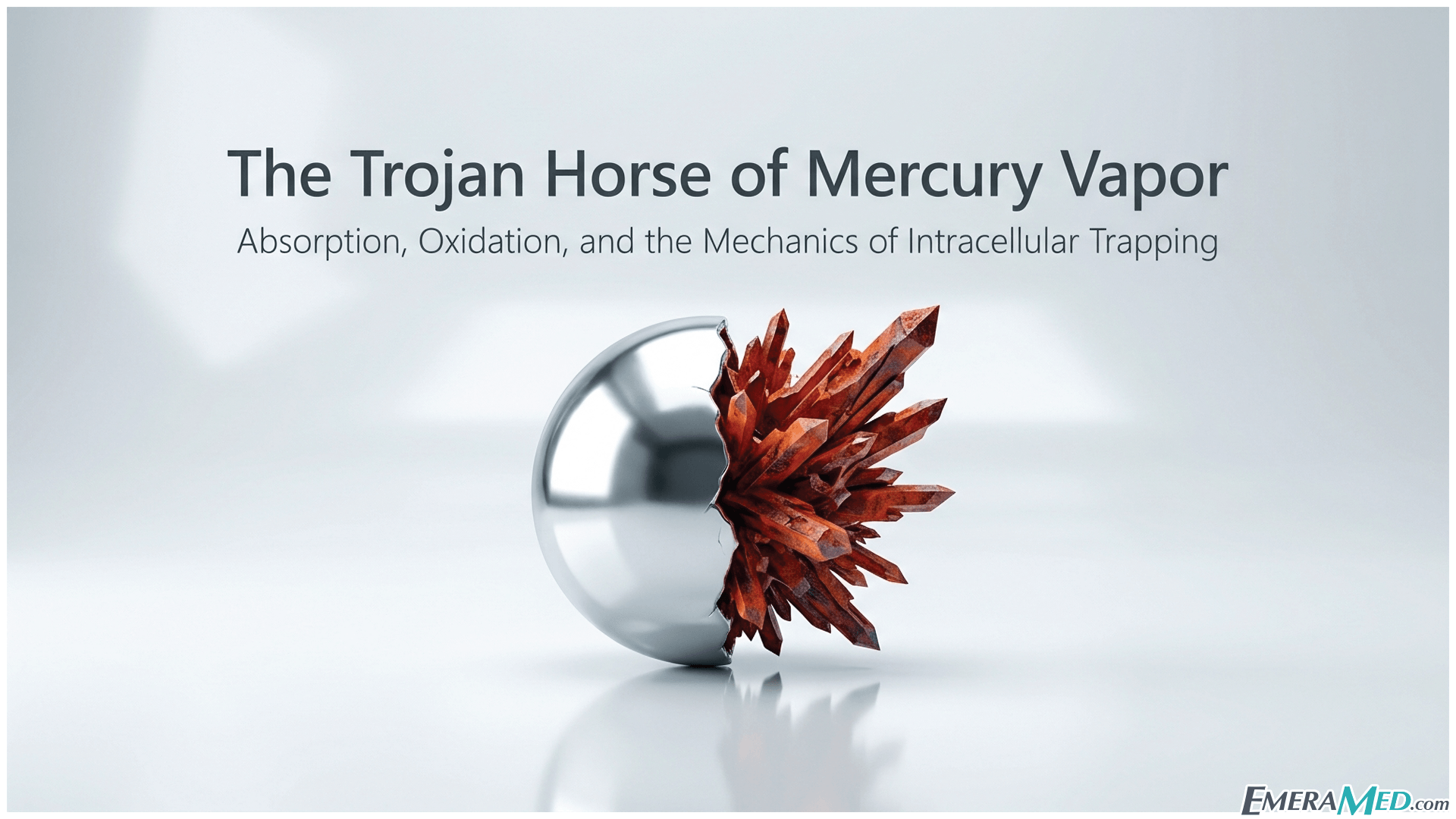
The following graphics illustrate the major concepts discussed above, including mercury vapor absorption, oxidation, intracellular trapping, and long-term tissue retention.


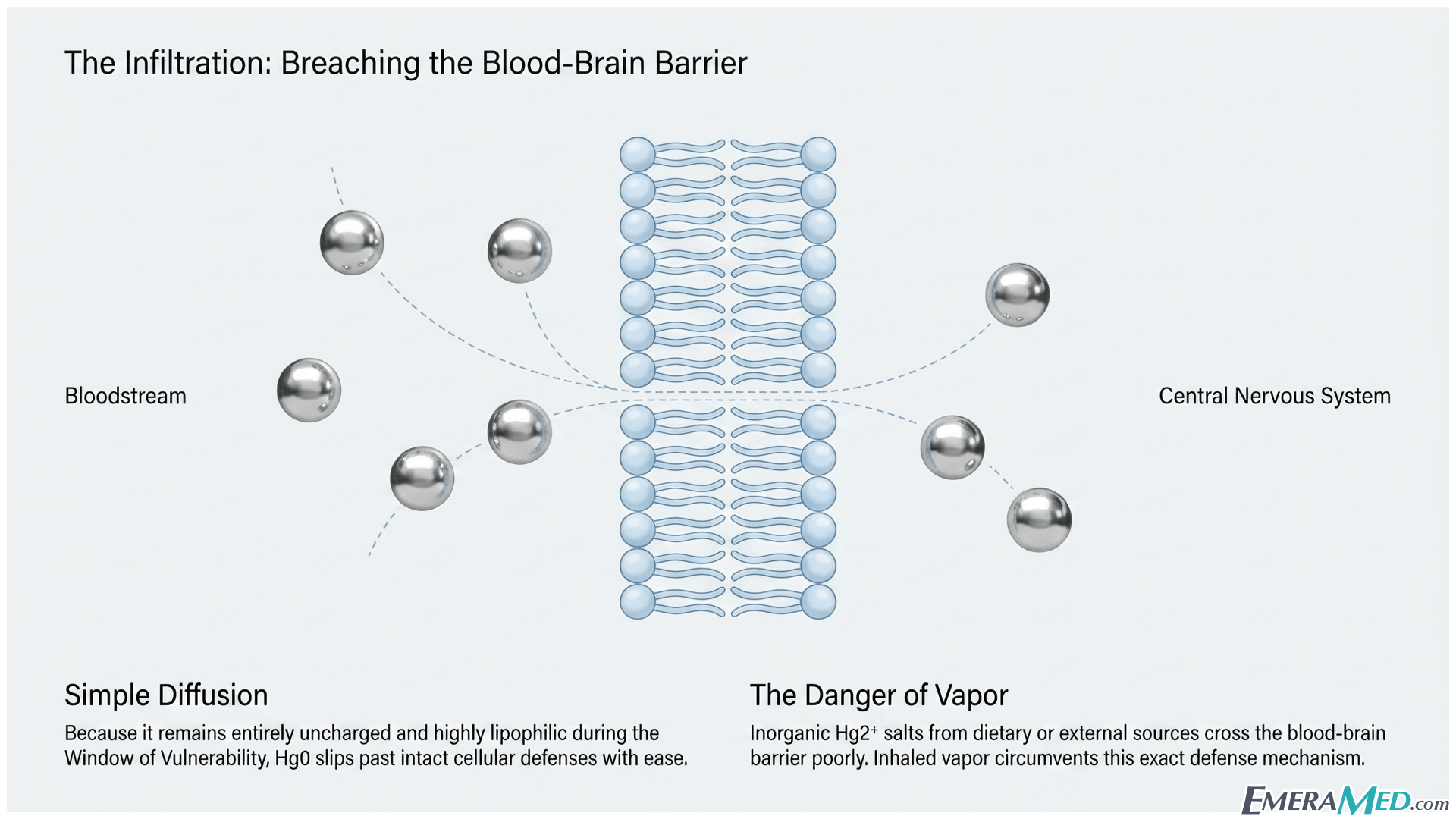
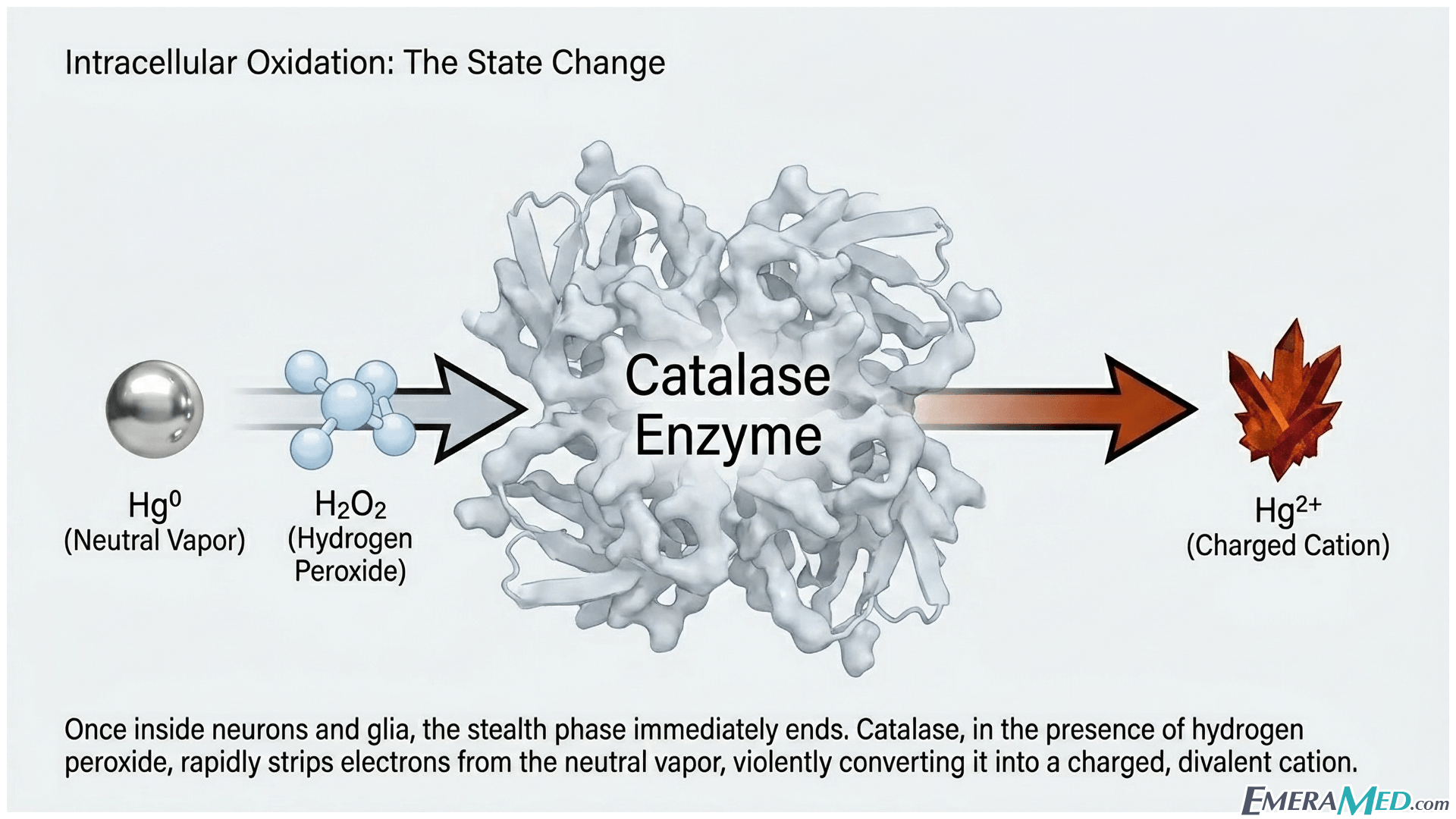
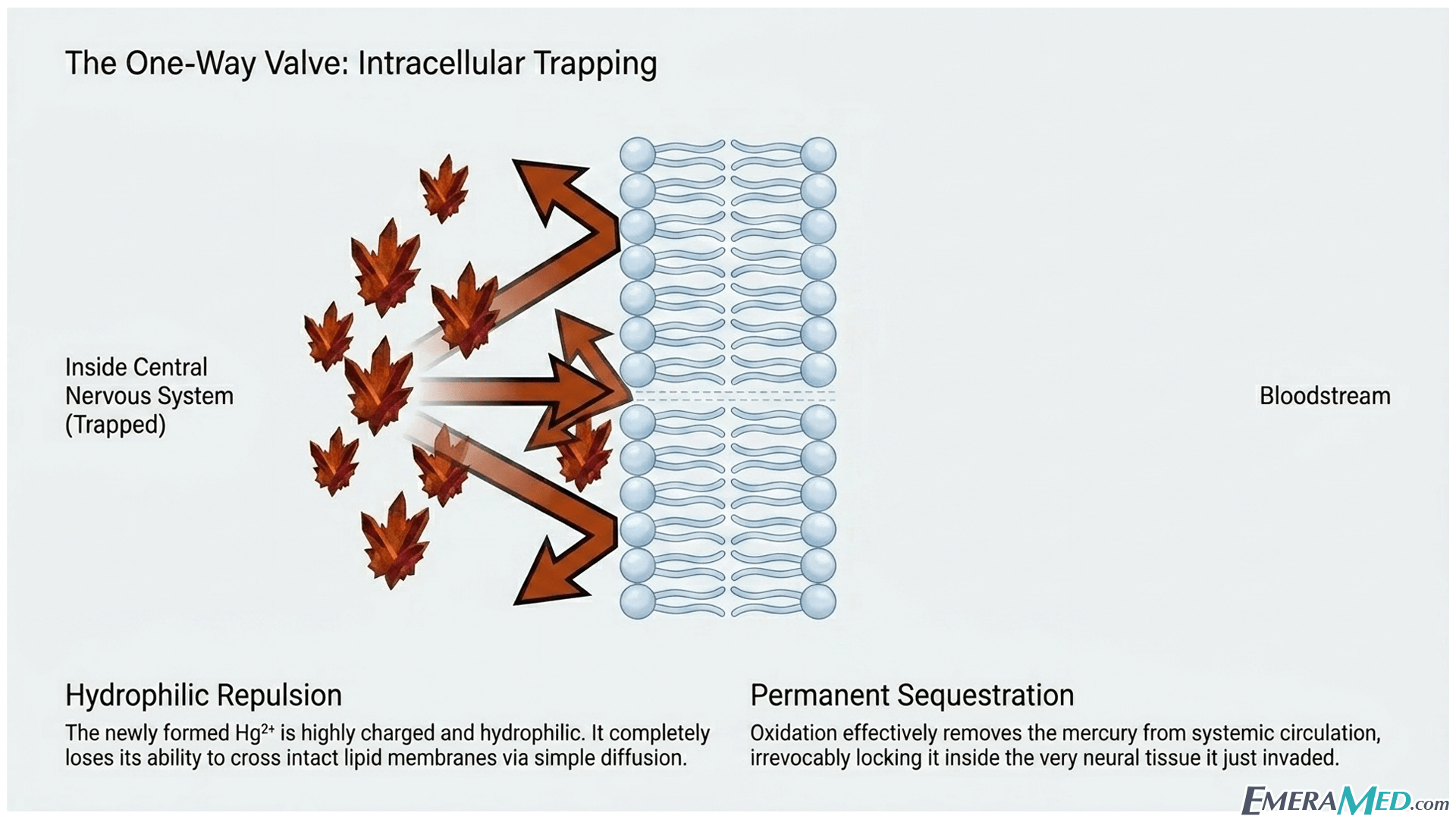
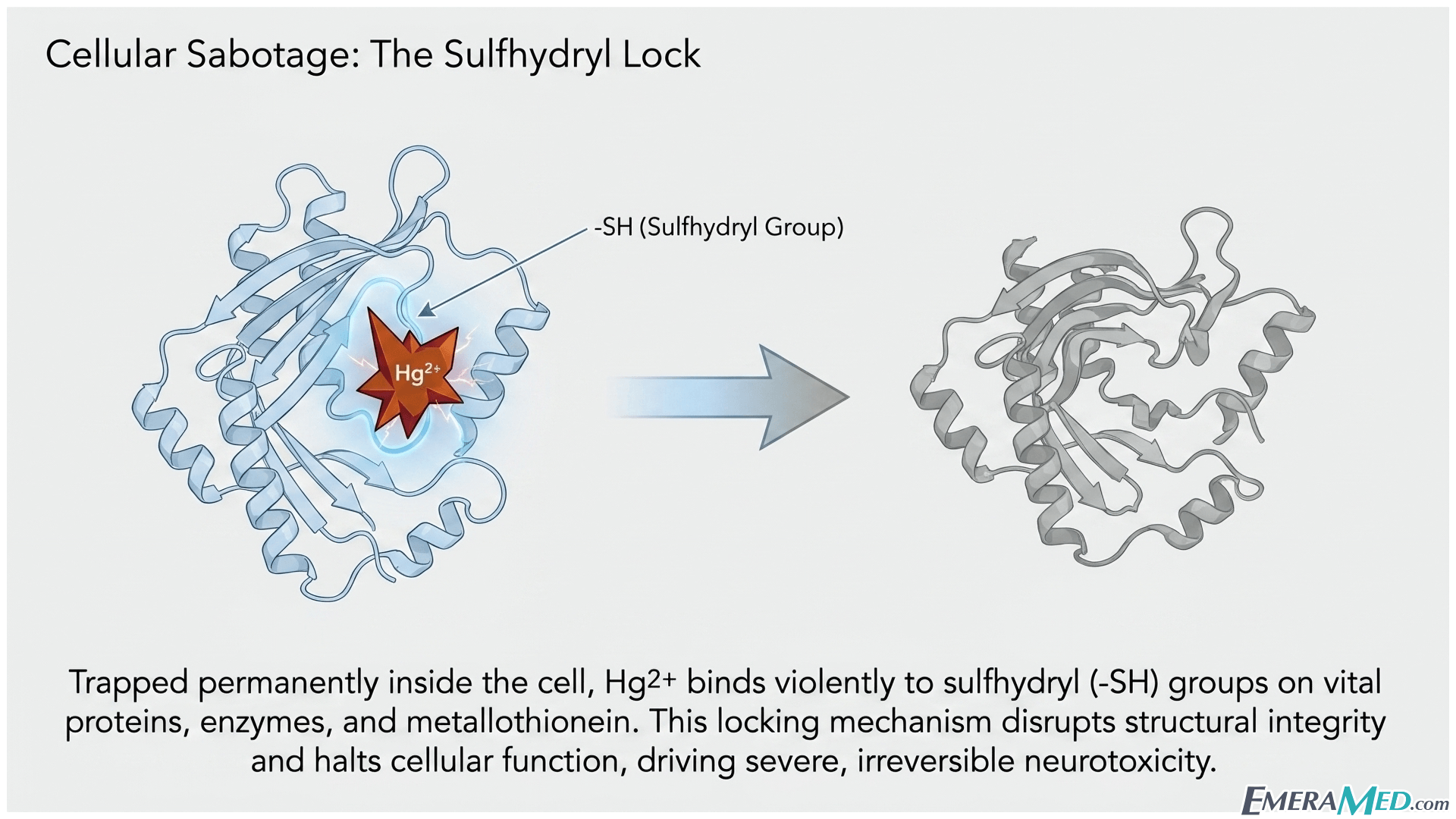

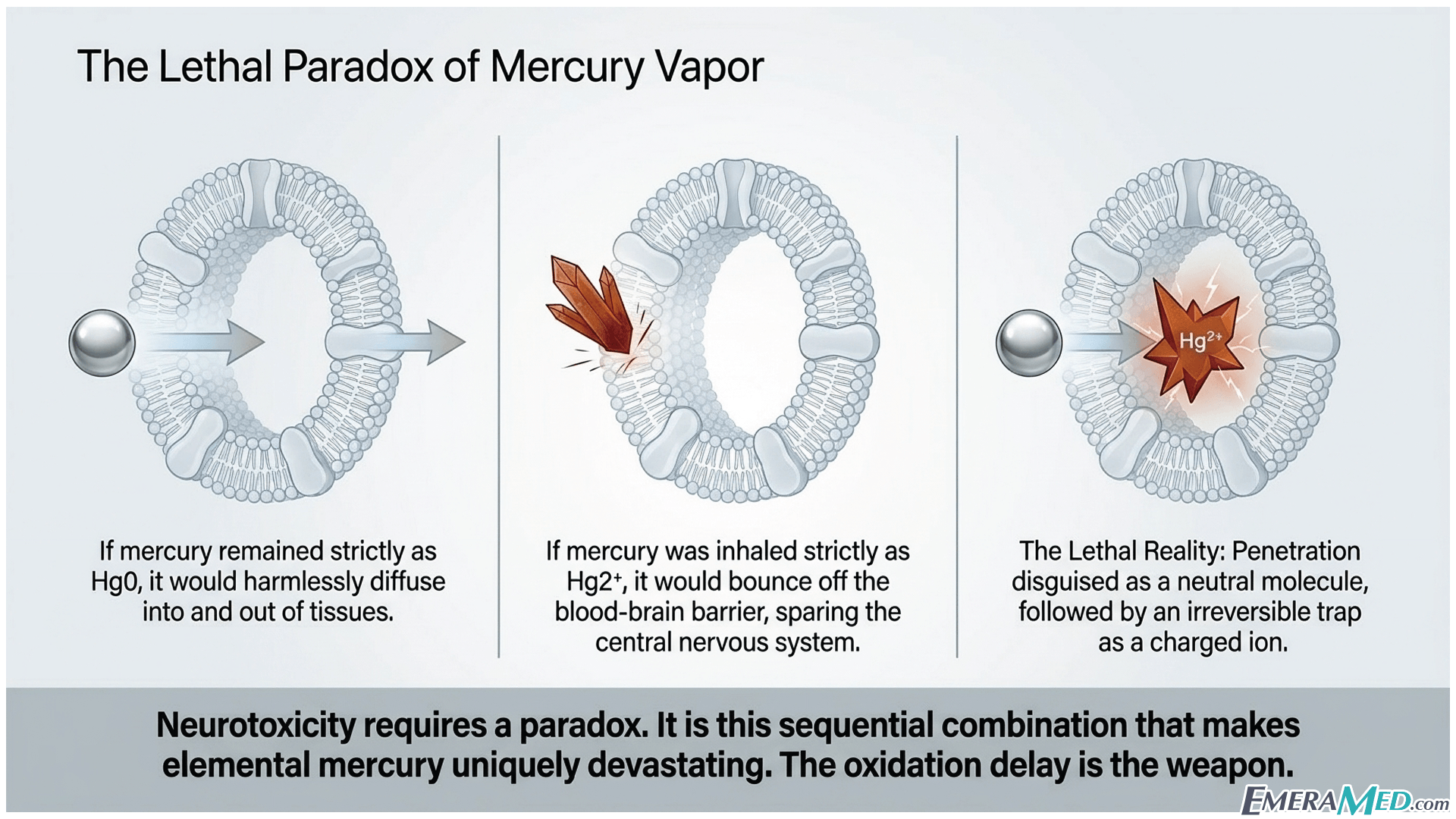
- In the brain: Hg⁰ crosses the BBB → gets oxidized inside neurons/glia → trapped as Hg²⁺. This leads to accumulation and neurotoxicity (even though inorganic Hg²⁺ salts from other sources cross the BBB poorly).
- In the kidneys: Highest overall accumulation occurs here as Hg²⁺ (via filtration and binding), leading to renal toxicity.
- Overall distribution: Oxidation removes Hg⁰ from circulation (limiting further exhalation or spread), but the trapping of Hg²⁺ causes prolonged retention in tissues (biological half-life often 30–90 days or longer in brain).
In short, the vapor form’s ability to penetrate cells and barriers before oxidation is what makes inhaled elemental mercury uniquely able to reach and damage the brain, while the subsequent conversion to charged Hg²⁺ causes it to get stuck and exert toxic effects intracellularly (especially by disrupting enzymes and proteins via sulfhydryl binding).
This mechanism is well-documented in toxicological profiles (e.g., ATSDR) and explains why elemental mercury vapor causes both acute pulmonary effects and chronic neurological/kidney damage, distinct from other mercury forms.
This article is for informational purposes only and is not intended to diagnose, treat, cure, or prevent any disease. Emeramide is an investigational drug under FDA review for the treatment of mercury poisoning and is not approved for any use.