

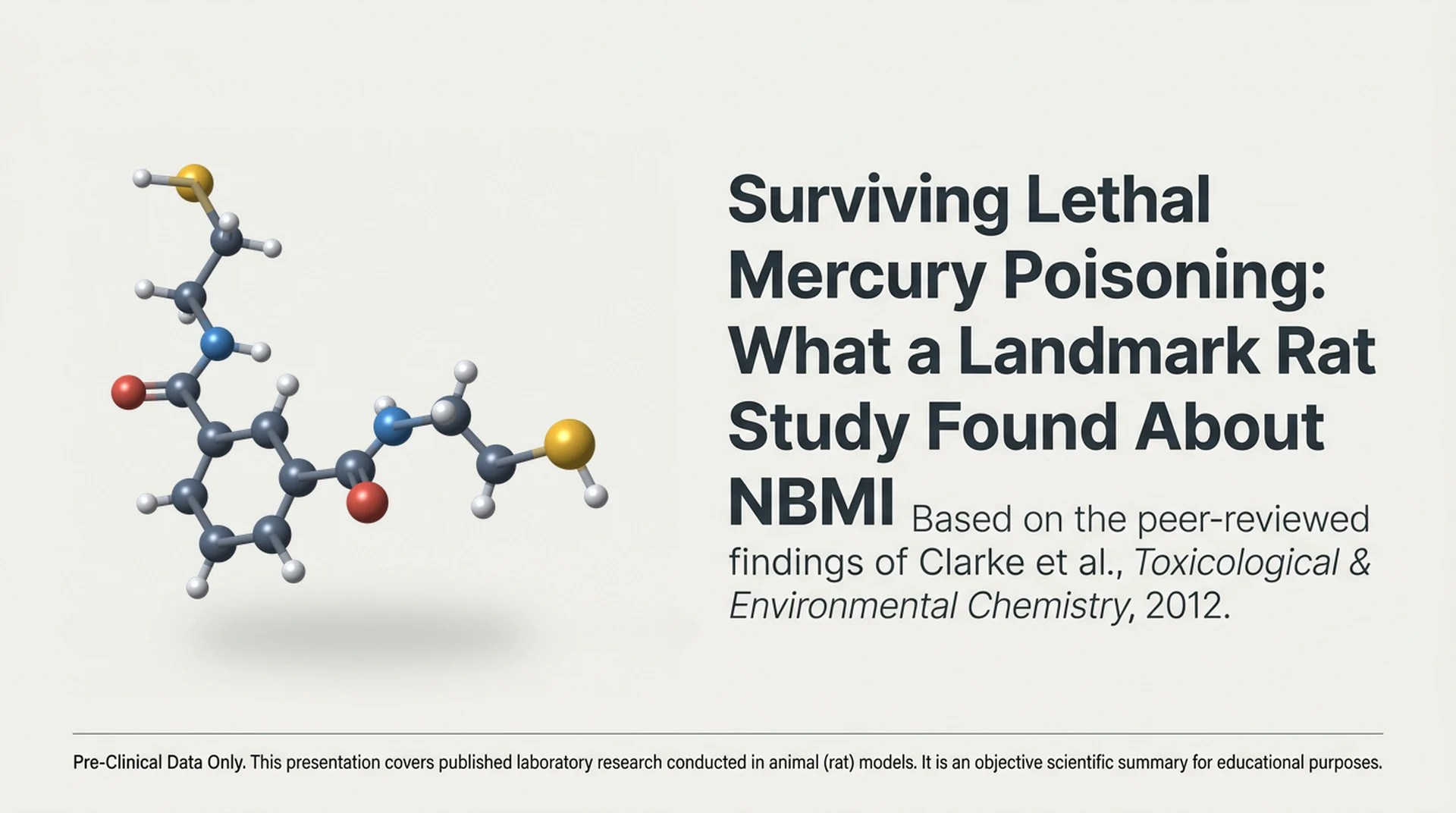
Study: Clarke and colleagues, Toxicological & Environmental Chemistry, 2012
DOI: https://doi.org/10.1080/02772248.2012.657199
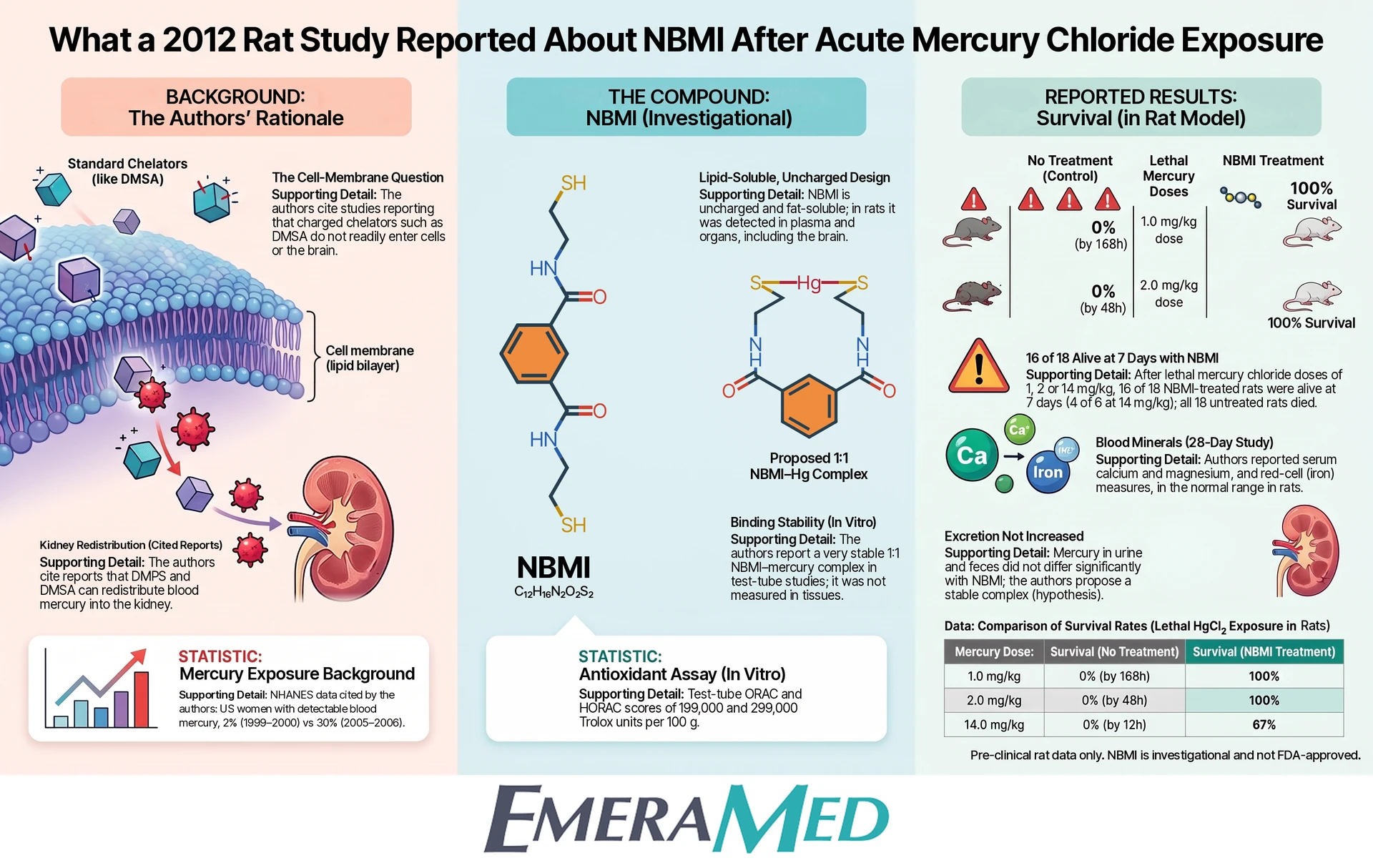
What this page covers: A peer-reviewed series of laboratory experiments in rats. In the main experiment, researchers gave young rats mercury at 1, 2 or 14 mg/kg, doses lethal to all untreated rats in this study. Some of the rats then received a single injection of the research compound NBMI (also called Emeramide). In this study, 16 of the 18 NBMI-treated rats survived the full week; every one of the 18 untreated rats died. The researchers also tracked signs of illness and where the mercury went in the body, and they tested NBMI on its own in rats.
This summary describes published animal (rat) findings only.
At a glance
- Who was studied: laboratory rats.
- Survival in rats: 16 of 18 rats given NBMI after lethal doses (1, 2 or 14 mg/kg) were alive at one week (4 of 6 at the highest dose); all 18 untreated rats died.
- Speed of death without NBMI: At the highest mercury dose, every untreated rat was dead within 12 hours. The 16 NBMI-treated survivors were kept for three months, and the researchers reported that they remained healthy and active.
- Fewer signs of illness, similar organ mercury: In a separate experiment, rats given NBMI after mercury stayed active and kept eating, while rats given mercury alone became visibly ill. This happened even though NBMI did not significantly change how much mercury the rats passed in urine or feces and did not lower mercury levels in their organs. The authors propose that NBMI binds mercury into a stable, non-reactive form inside the body.
- NBMI on its own, in rats and lab tests: No visible signs of toxicity after injections under the skin totaling up to 2,700 micromoles per kilogram, no deaths at oral doses up to 5 grams per kilogram, and a negative Ames test for genetic mutations.
Why mercury poisoning is an active area of research
Mercury is a metal that is harmful to living things. People can be exposed to it as a vapor, as mercury salts, or as “organic” compounds such as the methylmercury found in some fish. High exposures can damage the kidneys, the nervous system, and other organs.
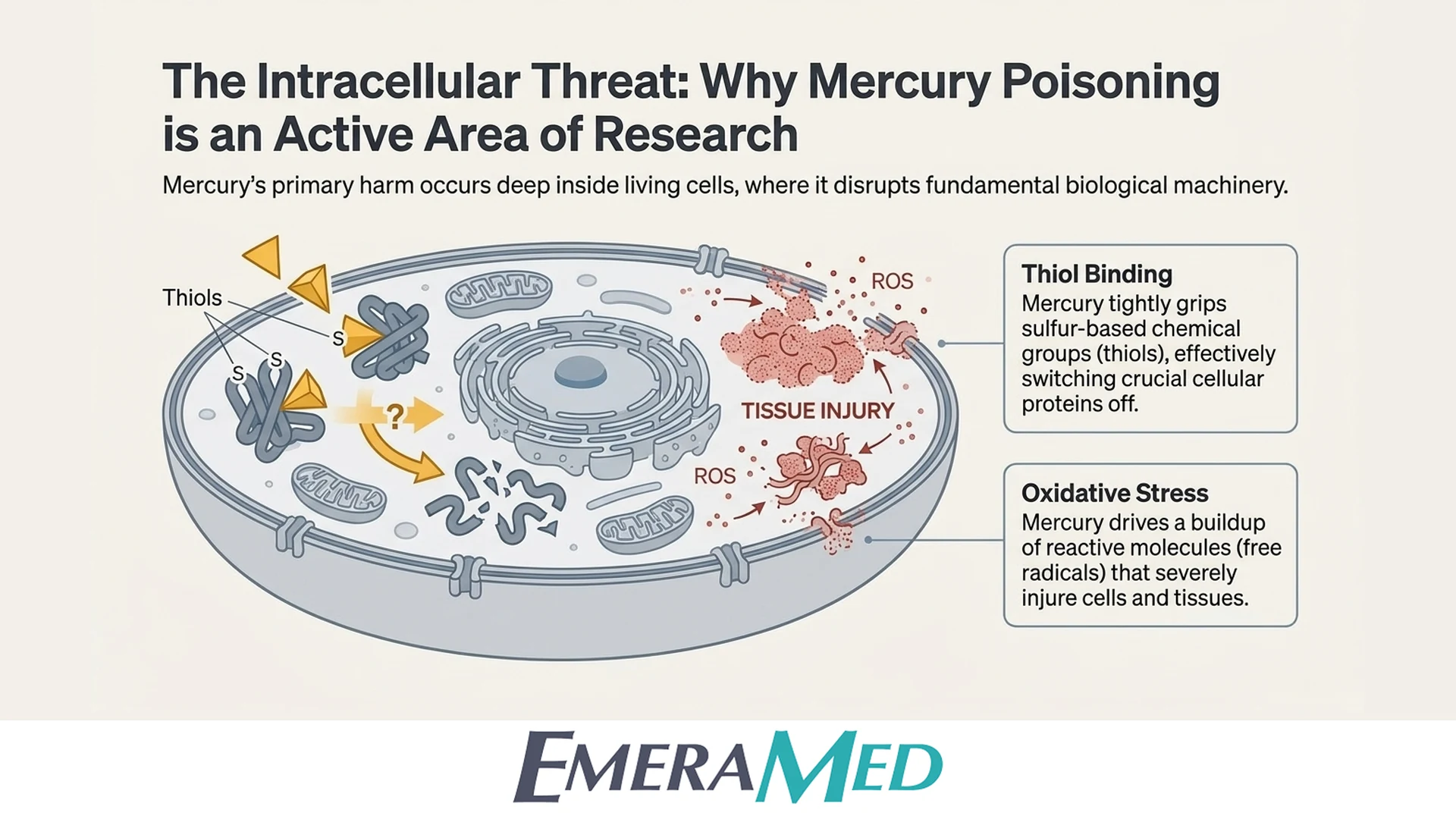
Much of mercury’s harm happens inside cells. Many of the body’s proteins contain sulfur-based chemical groups called thiols. Mercury grabs onto thiols very tightly, which can switch those proteins off. Mercury also drives oxidative stress, a buildup of reactive molecules (often called free radicals) that can injure cells and tissues.
Why a fat-soluble chelator is interesting
A chelator (KEE-lay-tor) is a molecule that binds tightly to a metal. The word comes from the Greek for “claw,” because the molecule grips the metal from more than one side.
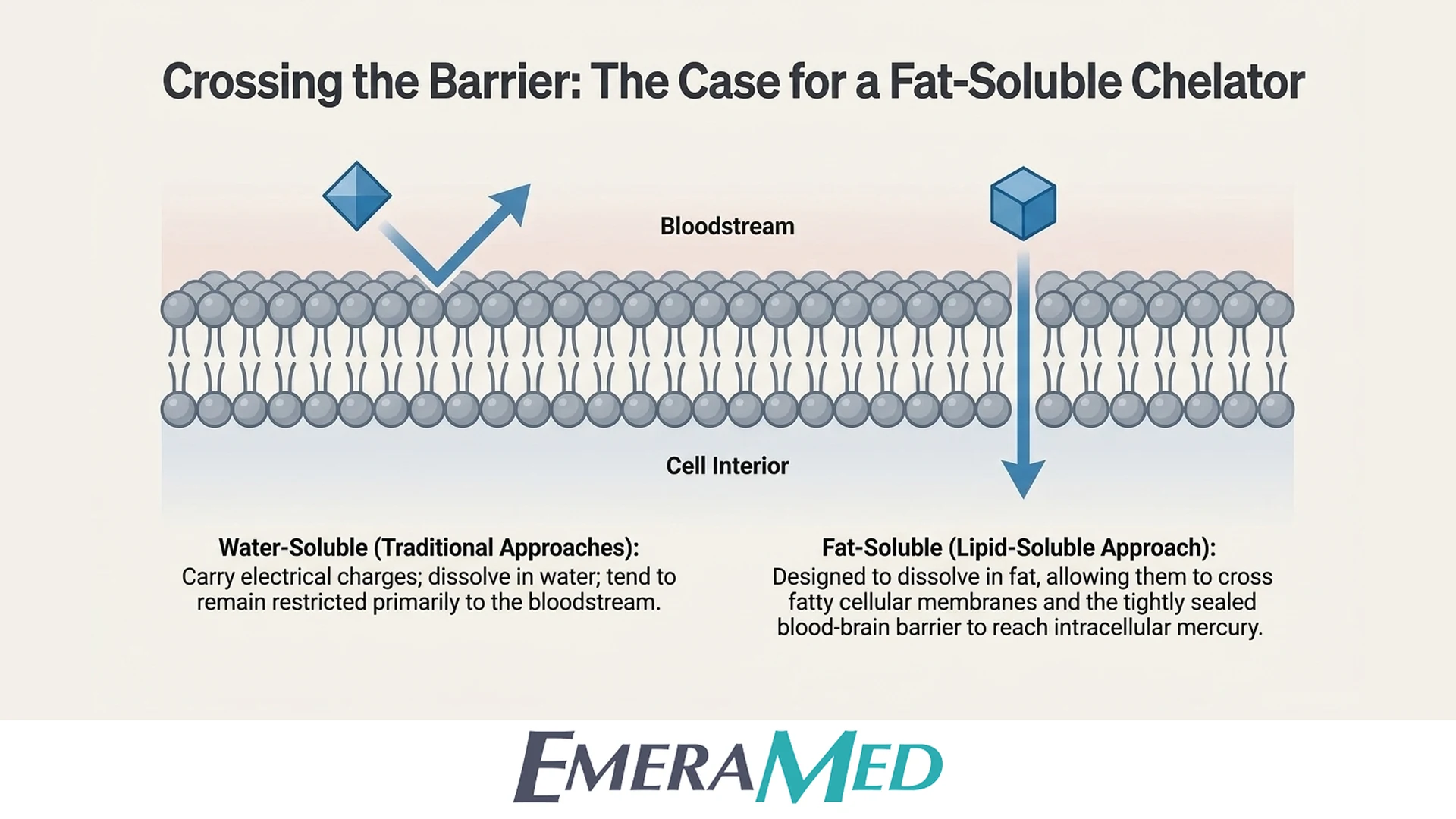
According to the study’s authors, many familiar metal-binding compounds dissolve in water and carry an electrical charge, which tends to keep them mostly in the bloodstream. Cells, however, are wrapped in fatty membranes, and the brain is shielded by a tightly sealed barrier. The researchers reasoned that a chelator that dissolves in fat (described as lipid-soluble) might be better able to reach mercury inside cells and tissues. NBMI was designed to explore that idea.
What is NBMI?
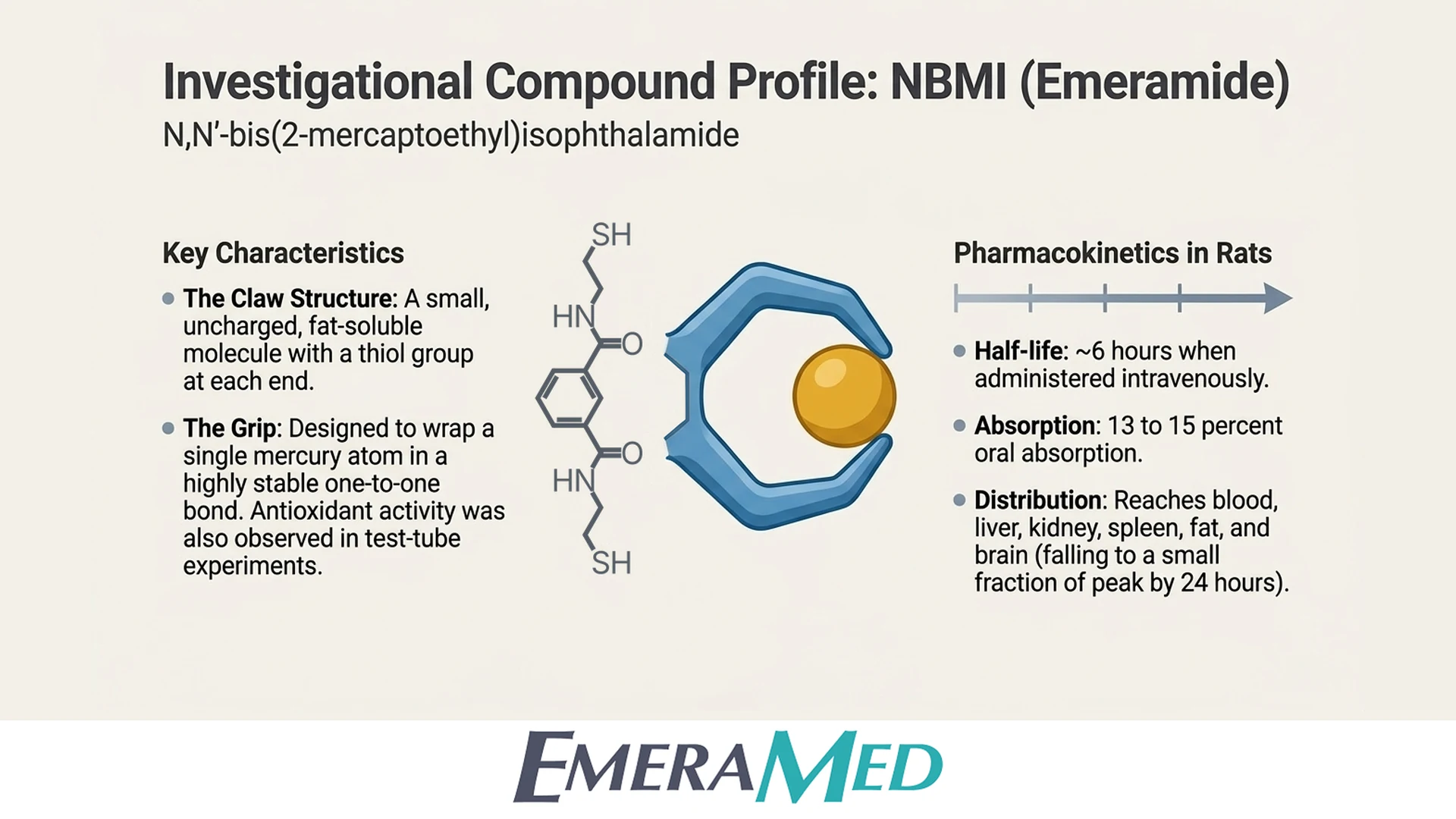
NBMI stands for N,N’-bis(2-mercaptoethyl)isophthalamide. It is also known as Emeramide. It is a small, uncharged, fat-soluble molecule with a thiol group at each end. The authors describe how those two “arms” wrap around a single mercury atom and hold it in a very stable one-to-one bond.
In test-tube experiments reported in the paper, NBMI also showed antioxidant activity (scavenging hydroxyl free radicals).
The researchers also measured how NBMI moves through the body of rats (its pharmacokinetics):
- Given into a vein, NBMI had a half-life (the time for blood levels to fall by half) of about 6 hours.
- Given by mouth, about 13 to 15 percent of the dose reached the bloodstream.
- After an oral dose, NBMI was detected in the blood and in several tissues, including the liver, kidney, spleen, fat, and brain. By 24 hours, levels had fallen to a small fraction of their peak.
How the study was done
The paper combines several rat experiments. The two main mercury experiments were:
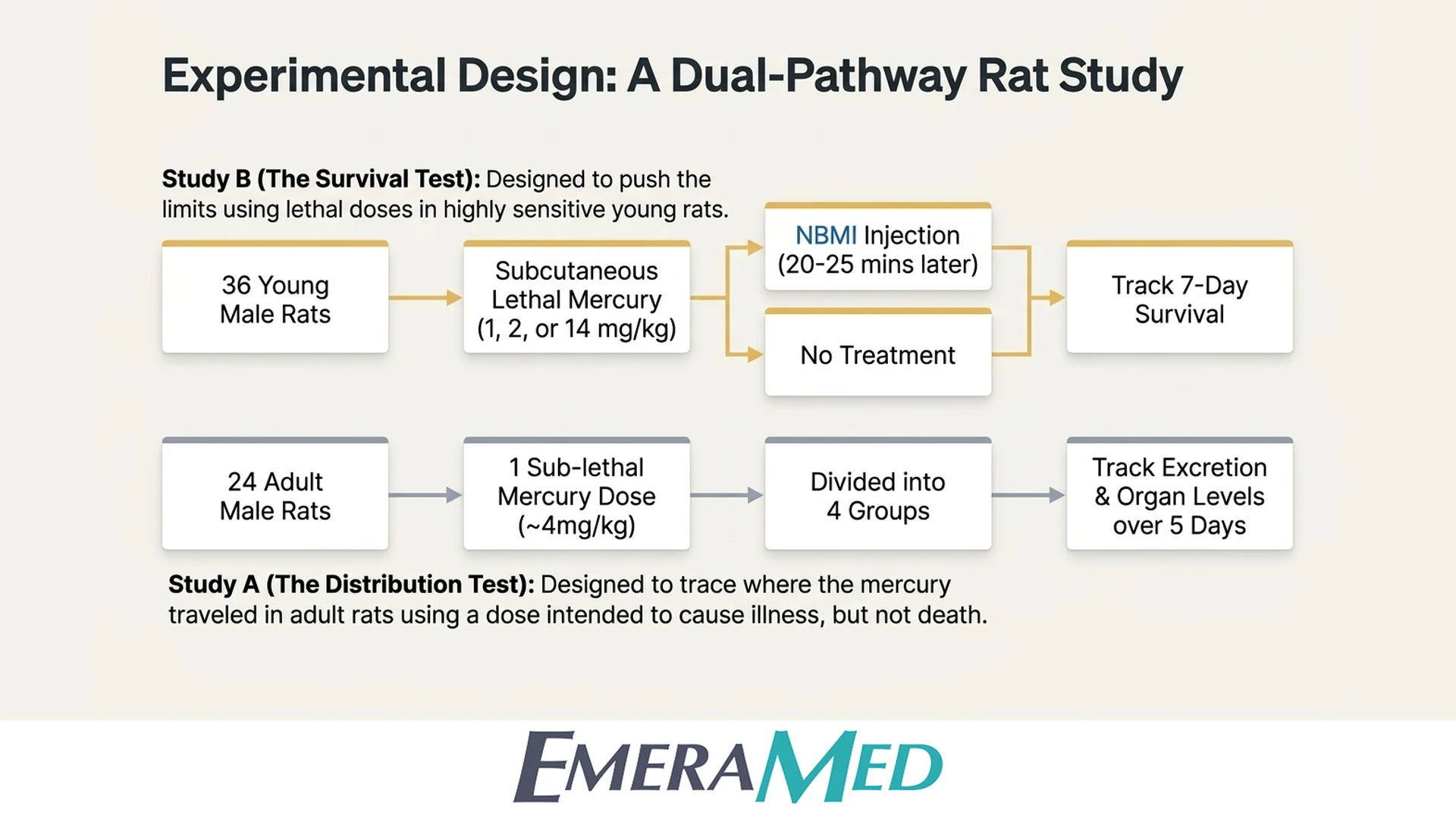
Study B: survival. The researchers used 36 young male rats, chosen because young rats are more sensitive to mercury. Each rat received an injection under the skin (a subcutaneous injection) of mercuric chloride, a common inorganic mercury salt, at 1, 2, or 14 milligrams per kilogram of body weight (mg/kg). At each dose, 6 rats received no treatment and 6 received one injection of NBMI under the skin 20 to 25 minutes after the mercury. The NBMI dose was 150 mg/kg for the two lower mercury doses and 250 mg/kg for the highest. The researchers followed the rats for seven days.
Study A: where the mercury went. The researchers used 24 adult male rats, which are less sensitive to mercury than young rats. They split the rats into four groups of 6:
- no mercury and no NBMI;
- NBMI only;
- mercury only;
- mercury followed by NBMI.
The researchers chose a mercury dose (about 4 mg/kg of mercuric chloride under the skin) intended to make adult rats ill without being expected to kill them. They gave NBMI (about 42 mg/kg) as one injection 20 to 30 minutes later. The team collected urine and feces for five days, then measured mercury in the brain, liver, kidneys, and fat.
What the researchers found: survival after lethal doses
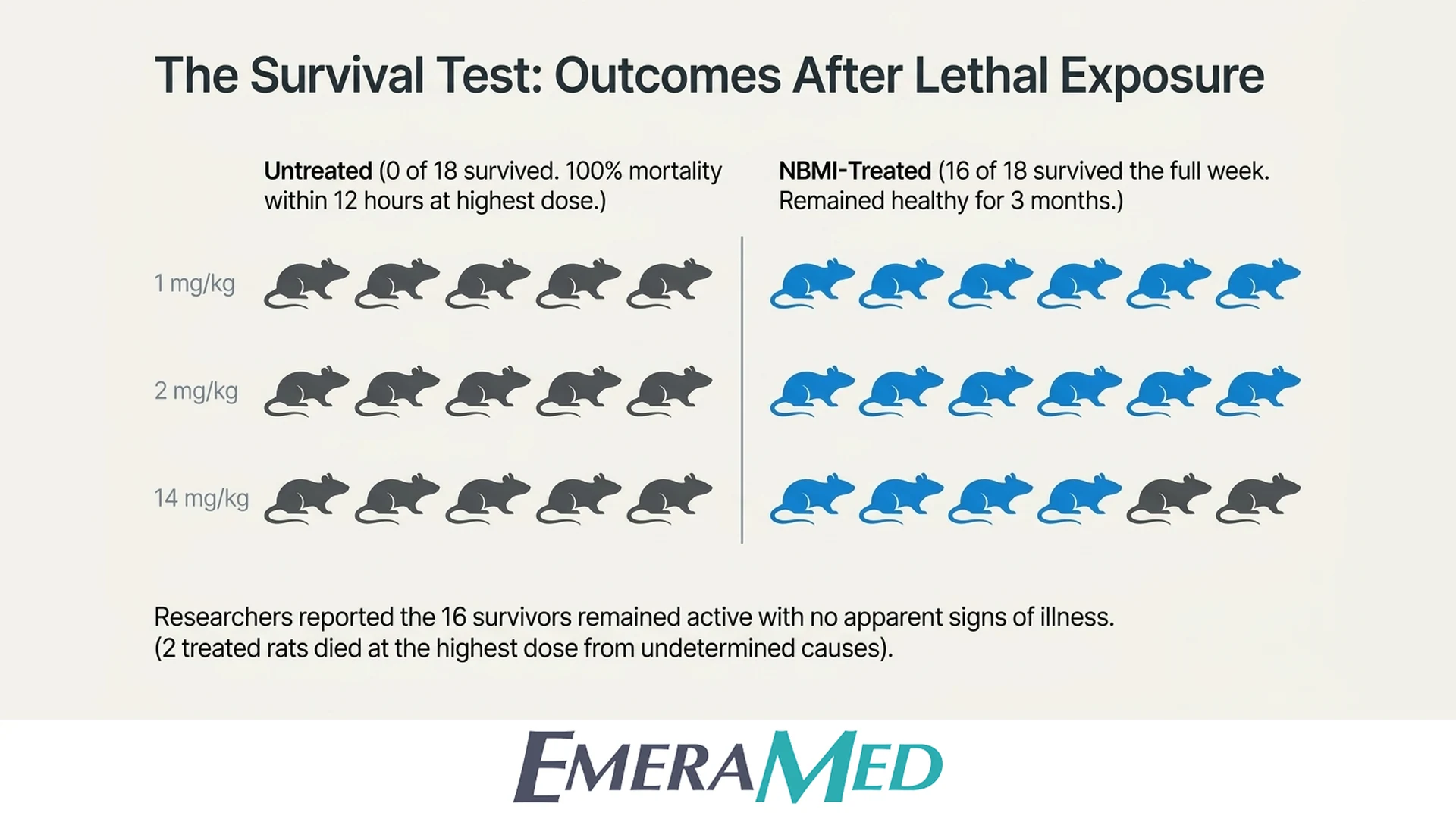
The survival results are the headline finding of this paper. In this study, every untreated young rat died at every mercury dose. After a single NBMI injection, 16 of 18 rats survived the full week:
| Mercury dose | Alive after 7 days: NBMI | Alive after 7 days: no treatment |
|---|---|---|
| 1 mg/kg | 6 of 6 (100%) | 0 of 6 (0%) |
| 2 mg/kg | 6 of 6 (100%) | 0 of 6 (0%) |
| 14 mg/kg | 4 of 6 (67%) | 0 of 6 (0%) |
| All doses | 16 of 18 | 0 of 18 |
Every dose was lethal to the untreated young rats. Even the lowest dose, 1 mg/kg, killed all six untreated rats, and the highest dose was 14 times that amount. The untreated rats died quickly. At the highest dose, half were dead within 6 hours and all were dead within 12 hours. At 2 mg/kg, none were alive at 48 hours. At 1 mg/kg, half had died by 72 hours and none were alive at one week.
The NBMI-treated rats had a very different outcome. In this study, every rat treated with NBMI after the two lower lethal doses survived the full week; none of the untreated rats did. At the highest dose, all rats showed immediate signs of poisoning, treated and untreated alike. Yet every treated rat was still alive at 24 hours, by which point every untreated rat at that dose had died. Four of the six treated rats survived the week. The other two died after about two days, from causes the authors could not determine.
The researchers kept the 16 treated survivors for three months. They reported no adverse effects: the rats remained healthy and active, with no apparent signs of illness.

What the researchers found: where the mercury went
Study A asked whether NBMI changed where the mercury ended up in the rats’ bodies.
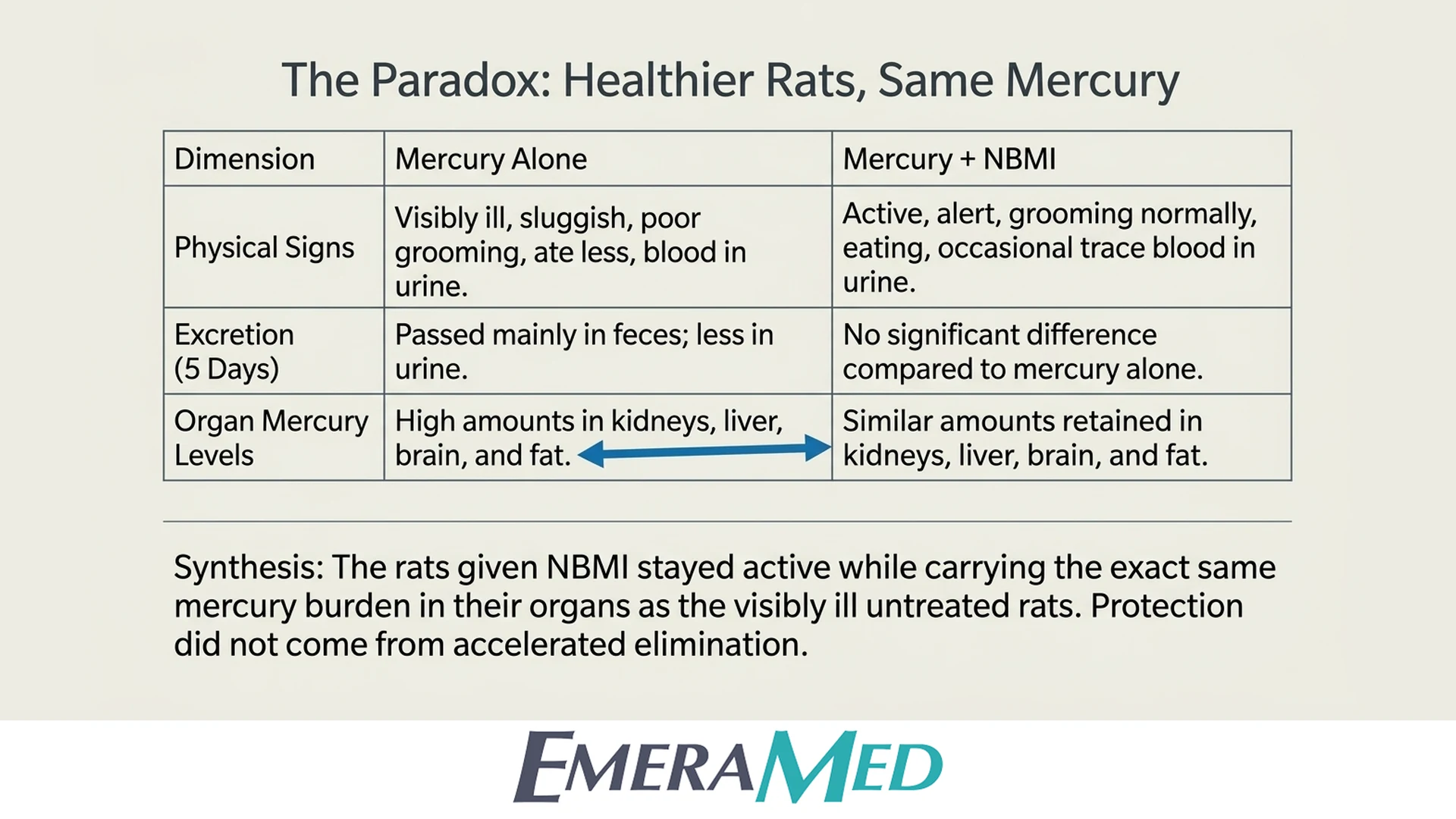
Signs of illness. All of the rats given mercury alone were visibly ill by the third day. They were sluggish, groomed poorly, ate less, and had blood in their urine that increased over time. Two rats in this group died early, the only early deaths in the study. The authors reported that the rats given NBMI after the same mercury dose showed no signs of discomfort (the observers knew which rats had received NBMI). They stayed active and alert, kept grooming normally, and kept eating, with only occasional traces of blood in their urine that did not increase.
Mercury in urine and feces. Over five days, the NBMI-treated rats did not pass a significantly different amount of mercury in their urine or feces than the rats given mercury alone. In both groups, mercury levels were much higher in the feces than in the urine.
Mercury in organs. NBMI did not lower mercury levels in the brain, liver, kidneys, or fat. The treated rats and the rats given mercury alone carried similar amounts, with the most in the kidneys and liver.
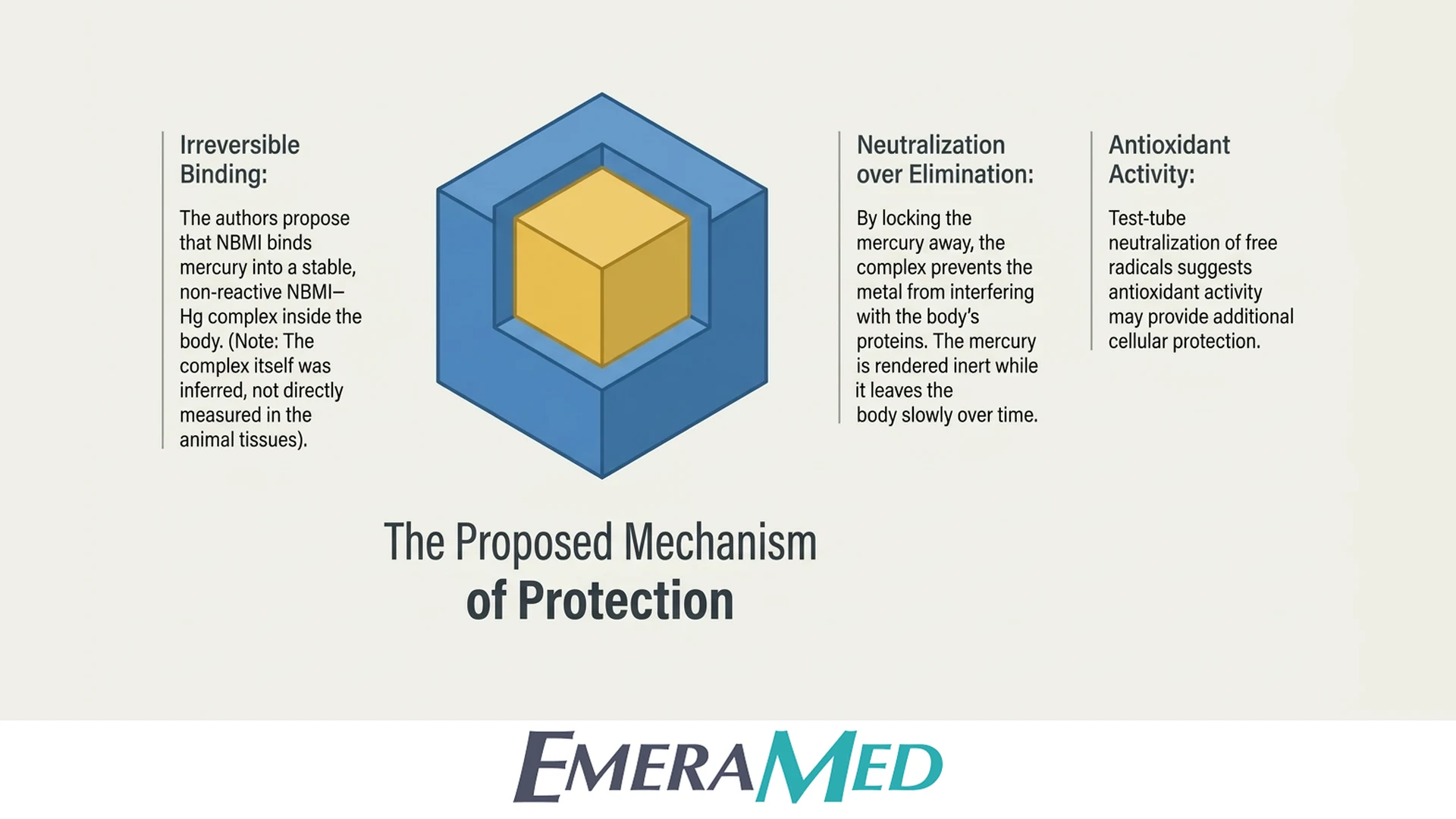
Fewer signs of illness, similar organ mercury. This contrast is central to the paper. The rats given NBMI stayed active and eating while carrying similar amounts of mercury in their organs as the visibly ill rats given mercury alone. The authors conclude that the differences they observed in the rats did not come from flushing mercury out faster. Instead, they propose that NBMI binds mercury into a stable, non-reactive NBMI–mercury complex, so the mercury may be less able to interfere with the body’s proteins while it leaves the body slowly over time. The authors point to the high mercury levels retained in the tissues of the treated rats, without visible illness, as support for this idea; the complex itself was not directly measured in the animals. They add that NBMI’s antioxidant activity could also play a part, a contribution this study did not measure.
NBMI on its own: what the rat and lab tests showed
The researchers also gave NBMI to rats without any mercury, including doses well above the single injection used in the survival experiment:
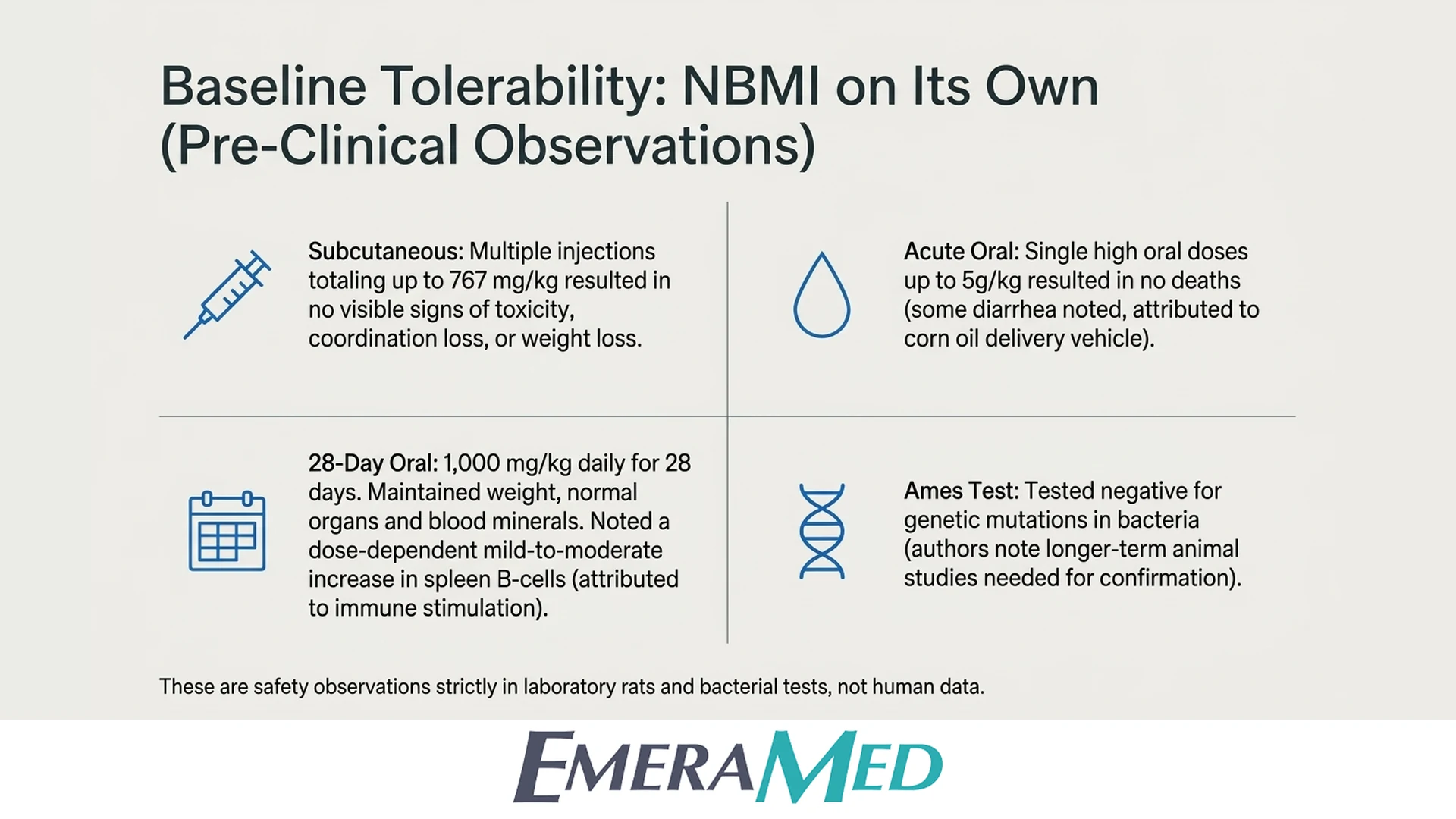
- Injections under the skin: Three rats received up to four NBMI injections over 10 days, with cumulative doses reaching as high as 2,700 micromoles per kilogram (about 767 mg/kg). The researchers saw no weight loss, no loss of coordination, and no other visible signs of toxicity.
- Single high oral doses: No deaths occurred in three female rats given NBMI by mouth at doses up to 5 grams per kilogram. The only sign noted was some diarrhea, which the authors attributed to the large volume of corn oil used to deliver the dose.
- 28-day oral study: 80 rats received NBMI by mouth daily for 28 days, at up to 1,000 mg/kg per day. None died, and they maintained their weight. The authors report that microscopic examination found no organ changes indicating toxicity. The blood minerals checked, including sodium, potassium, calcium, and magnesium, were reported as normal. The only effect noted was a mild-to-moderate increase in the growth of B-cells (a type of immune cell) in the spleen, which rose with dose. The authors attribute this to immune stimulation linked to NBMI’s antioxidant activity.
- Ames test: NBMI tested negative in the Ames test, a standard laboratory screen that uses bacteria to check whether a substance causes genetic mutations. The authors note that longer-term animal studies would be needed to confirm this.
These are observations in rats and in laboratory tests.
What the researchers concluded
The authors conclude that, in their rat experiments, a single dose of NBMI given shortly after an acute mercury injection was followed by higher survival and fewer signs of toxicity in rats. Their leading explanation is that NBMI binds mercury “irreversibly in a stable, non-reactive NBMI–Hg complex,” with its antioxidant activity possibly also contributing.
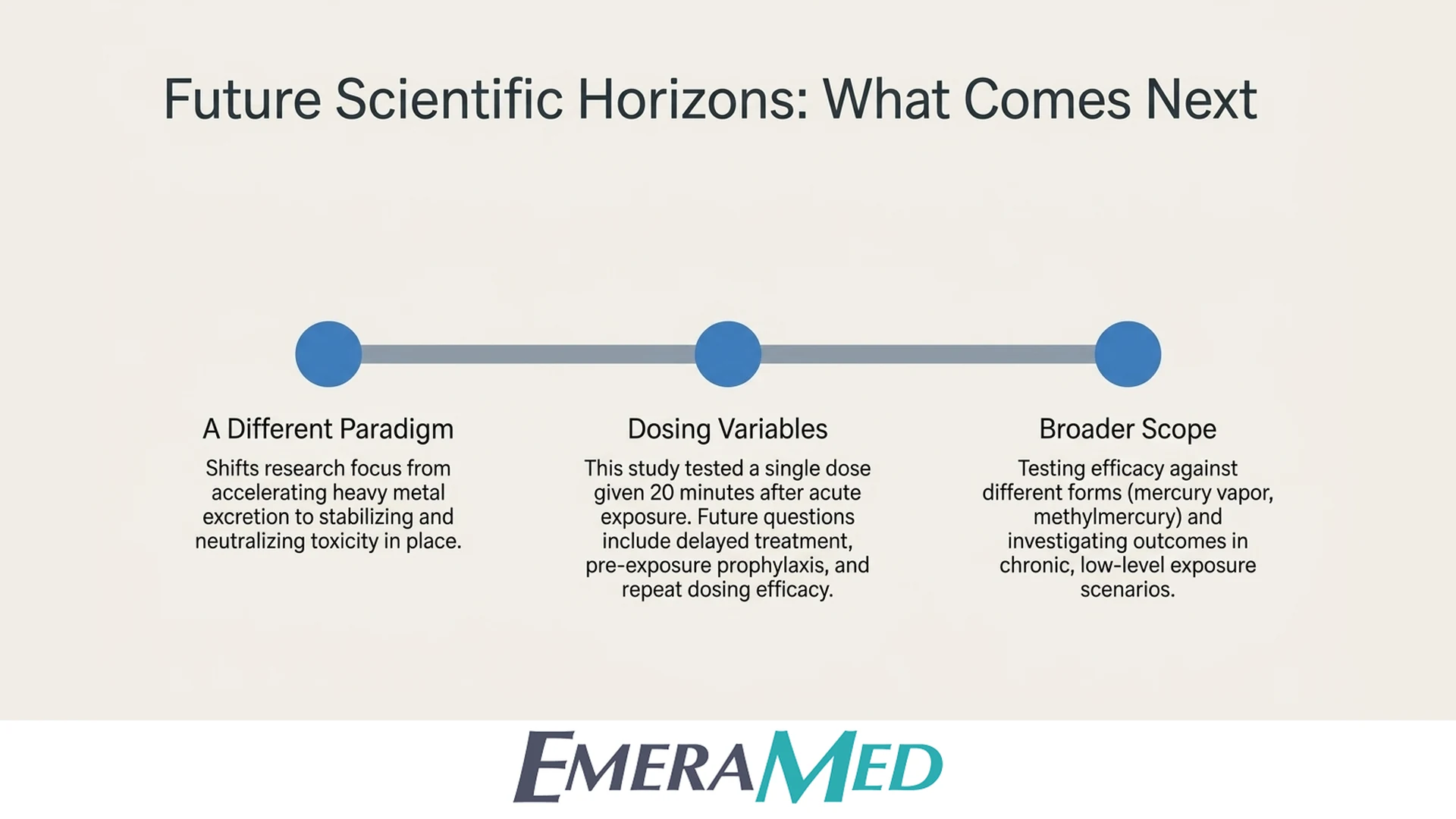
The authors also set out the scope of what they tested. NBMI was given within about 20 minutes of the mercury, and they note it may not perform the same way if given later. They tested only one form of mercury, mercuric chloride, so results for mercury vapor or organic mercury may differ. They studied only single doses.
Why this study matters for future research
This rat study raised clear questions for further NBMI research:
- A different approach. In these rat experiments, most NBMI-treated rats survived lethal mercury doses and showed fewer signs of illness, even though NBMI did not lower organ mercury levels in the companion experiment. That points research toward the authors’ idea of binding mercury into a non-reactive form, rather than focusing only on how fast mercury leaves the body.
- A single dose. Every survival result in this study came from one NBMI injection, which makes timing, dose, and repeat dosing natural next questions.
- Next steps named by the authors. These include giving NBMI later after exposure or before exposure, repeat doses, and new formulations. They also call for studies of other forms of mercury, such as vapor and methylmercury, and of long-term, low-level exposure.
Study details
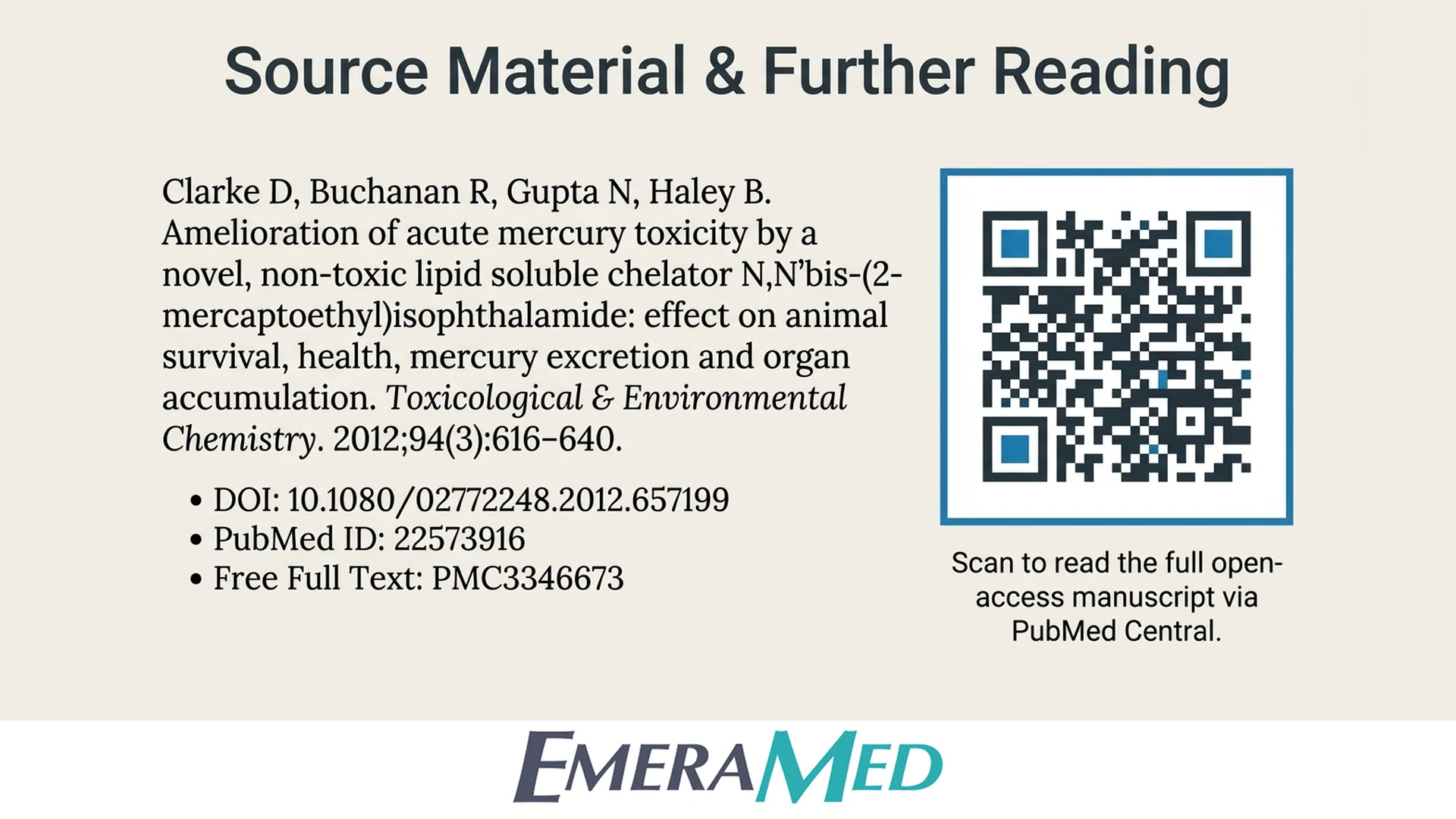
Clarke D, Buchanan R, Gupta N, Haley B. Amelioration of acute mercury toxicity by a novel, non-toxic lipid soluble chelator N,N’bis-(2-mercaptoethyl)isophthalamide: effect on animal survival, health, mercury excretion and organ accumulation. Toxicological & Environmental Chemistry. 2012;94(3):616–640.
- DOI: https://doi.org/10.1080/02772248.2012.657199
- PubMed ID (PMID): 22573916
- Free full text (PubMed Central, PMC3346673): https://pmc.ncbi.nlm.nih.gov/articles/PMC3346673/
Important notice
NBMI (Emeramide) is an investigational compound. It is not approved by the U.S. FDA or any other regulatory agency for any use. The results described on this page come from studies in rats, not people, and do not show that NBMI is safe or effective in humans. This information is for educational purposes only and is not medical advice.